Showing posts with label araceae. Show all posts

Saturday, May 21, 2011

Amorphophallus bulbifer 2011


Family: Araceae •
Genus: Amorphophallus •
Species: bulbifer
(Schott) Blume (1837)•
Country of Origin: India •
Synonyms:Arum bulbiferum
Roxb.•
Common Names: Voodoo Lily, Devil's Tongue, Corpse Flower •


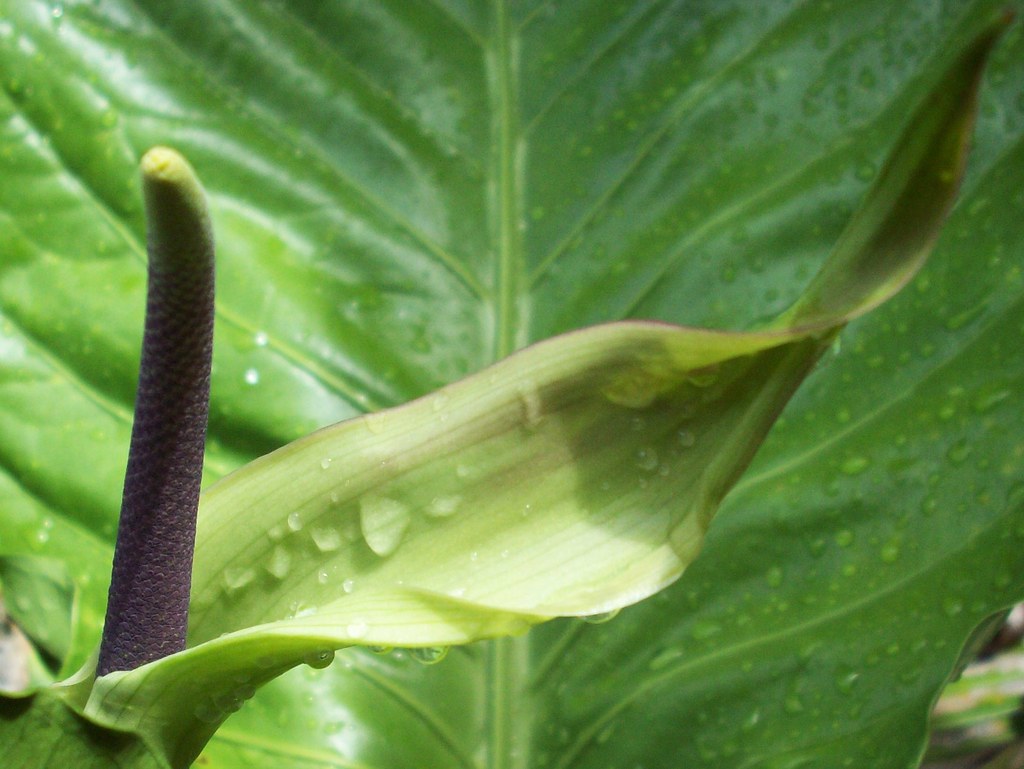
A. bulbifer is one of my prized Amorphophallus species. I found this little stinker by its stench this morning! This flower smells like rotting flesh and sulfur to attract its pollinator; flies, beetles and other insects. What you see above is the flower. Like most aroids it is composed of a spathe which usually envelops the spadix a flower spike with a fleshy axis. One interesting thing about most Amorphophallus is that they produce one single leaf, which you can see in my previous post Amorphophallus bulbifer. I know it looks like many leaves but I assure you botanically speaking it is a single leaf. This species has a deep green leaf with pink margins. The leaf will sometimes grows bubils in its axis which it uses for asexual reproduction. This trait was incorporated into its species name bulbifer. It also has an amazing looking stem almost reptilian or alien in appearance. The leaf will die off after some time usually after summer; at which time the plant will go dormant. During this period, which fortunately enough for me coincides with our dry season, I withhold all water to prevent fungal activity. After one or two years of vegetative growth you are rewarded with a beautiful and unusual flower as seen above! A. bulbifer  is easy to grow and I grow this plant in a moist medium consisting of peat moss, vermiculite, and sand; in full morning sunlight (50-75%). I often have bubils and seeds for sale; contact me if you are interested and I will put you on my waiting list.

Sources: Amorphophallus. (2011, April 13). Retrieved from http://en.wikipedia.org/wiki/Amorphophallus 

Creative Commons License
Amorphophallus bulbifer 2011 by Eric Bronson is licensed under a Creative Commons Attribution-Noncommercial-No Derivative Works 3.0 United States License.

Tuesday, August 17, 2010

Arrowhead Plant Syngonium podophyllum


Syngonium podophyllum
Family: Araceae •
Genus: Syngonium •
Species: podophyllum (Schott) •
Country of Origin: from Mexico to Panama •
Common Names: African Evergreen, American Evergreen, Arrow Leaf, Arrowhead Vine, Arrowhead-Vine, Goosefoot Plant, Goosefoot Vine, Nephthytis •

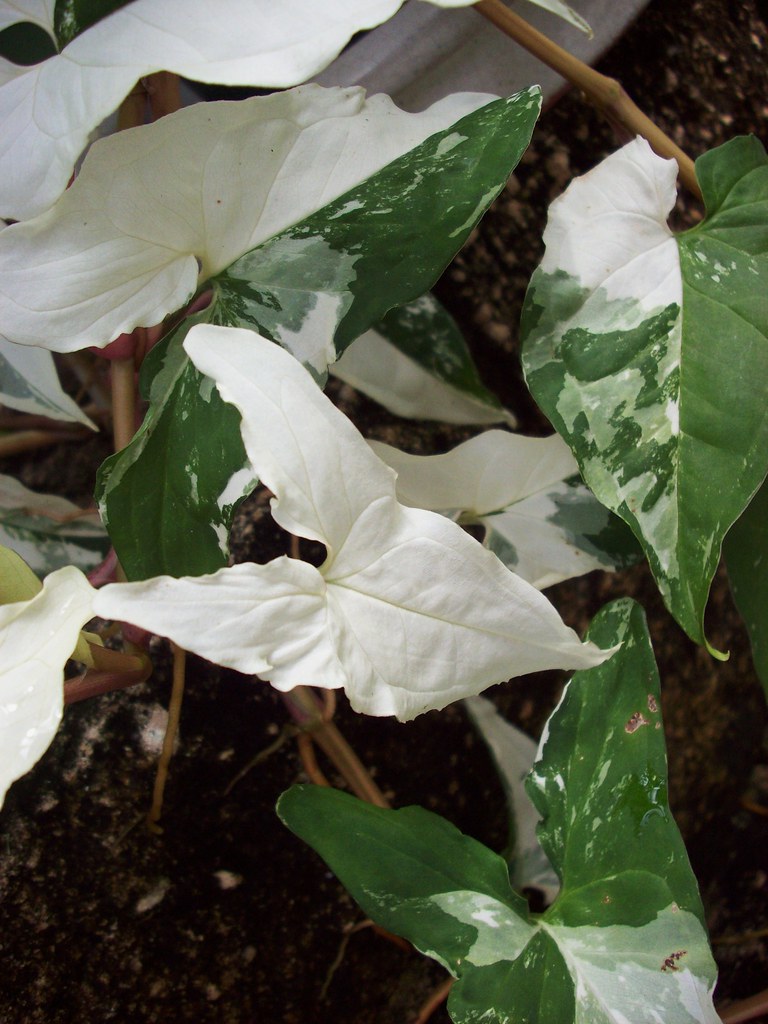
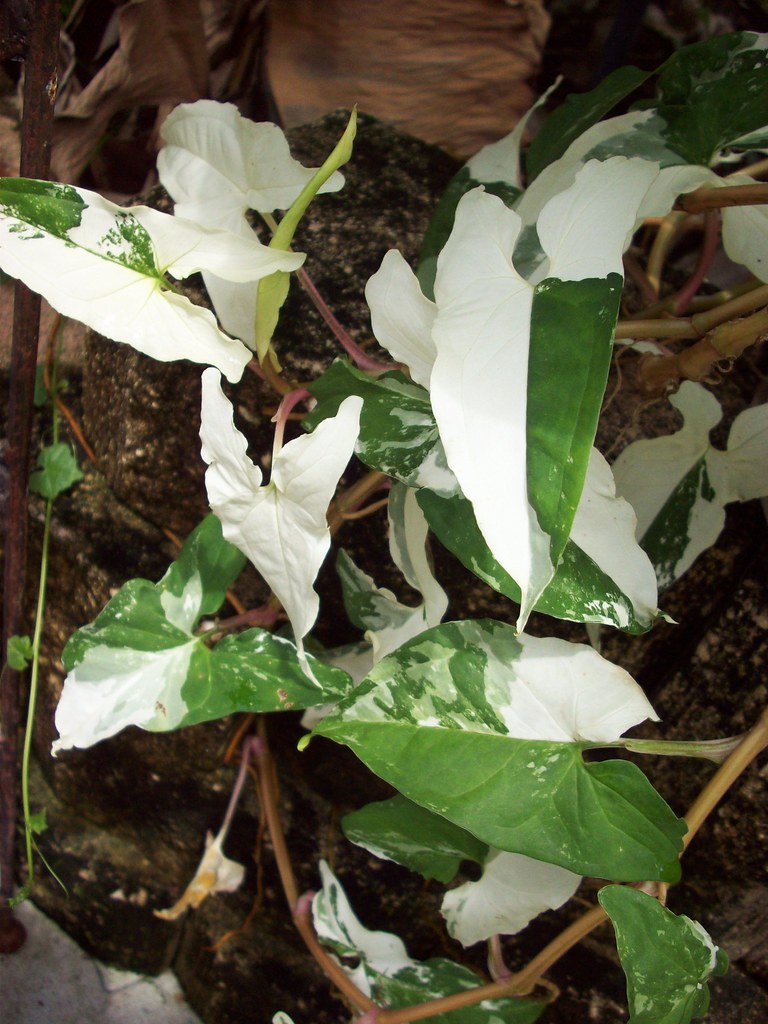
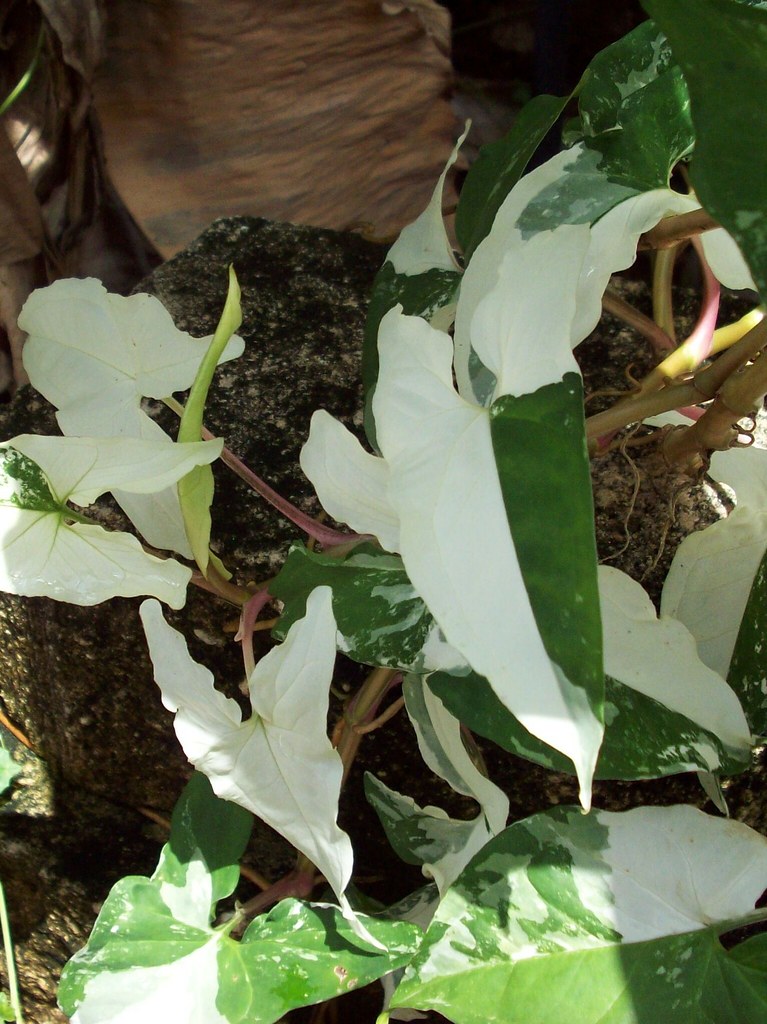
I got this little beauty at one of Fairchild's aroid show & sales. There's another coming on Saturday, September 20, 2008 - Sunday, September 21, 2008. If your in the south Florida area I would recommend a visit! I always find something unique when I go so I'm looking forward till then. This vine is taking over a small wall I built by my bananas. I can't complain though because it's beautiful. It's in the shade of the bananas. Also, I have it in a pot which sits inside a dish with a little extra water. It seems to be flourishing!


Creative Commons License
Arrowhead Plant by Eric Bronson is licensed under a Creative Commons Attribution-Noncommercial-No Derivative Works 3.0 United States License.
Based on a work at www.flickr.com

Saturday, July 19, 2008

Amorphophallus bulbifer


Amorphophallus bulbifer
Family: Araceae •
Genus: Amorphophallus •
Species: bulbifer (Schott) Blume (1837)•
Country of Origin: India •

Is one of my prized Amorphophallus species what you see above is the flower which like most aroids is composed of a spathe which usually envelops the spadix [a flower spike with a fleshy axis] typically you get a single leaf first which you see below with an amazing looking stem. This will die off after some time. At which time the plant will go dormant. During this period, which fortunately enough for me coincides with our dry season, I withhold any water. After one or two years of vegetative growth you are rewarded with a beautiful and unusual flower as seen above!
I grow this plant in a medium consisting of peat moss, vermiculite, and sand. In full morning sunlight.
Enjoy!


Sources: Amorphophallus. (2011, April 13). Retrieved from http://en.wikipedia.org/wiki/Amorphophallus

Creative Commons License
Amorphophallus bulbifer by Eric Bronson is licensed under a Creative Commons Attribution-Noncommercial-No Derivative Works 3.0 United States License.
Based on a work at www.flickr.com

Sunday, July 13, 2008

Anthurium sp. 'Brents Banos' 046

Anthurium (Schott, 1829), is a large genus of about 600- 800 (possibly 1,000) species, belonging to the arum family (Araceae). TROPICOS lists 1901 types, although some of these are duplicates. It is one of the largest and probably the most complex genus of this family; certainly it is one of the most variable. Many species are undoubtedly not yet described and new ones are being found every year. The species has neotropical distribution; mostly in wet tropical mountain forest of Central America and South America, but some in semi-arid environments. Most species occur in Panama, Colombia, Brazil, the Guiana Shield and Ecuador. According to the work of noted aroid botanist Dr. Tom Croat of the Missouri Botanical Garden, this genus is not found in Asia.[1] Some species have been introduced into Asian rain forests, but are not endemic.

from Wikipedia
http://en.wikipedia.org/wiki/Anthurium

I purchased this Anthurium from Fairchild Tropical Botanic Garden in 2005 and sort of neglected it until recently. It's flourishing now and rewarding me with this interesting spadix and spathe. It's still growing in the pot that it came in. [I'm a terrible gardener!] Morning sun only and a little supplemental watering.


Creative Commons License
Anthurium sp. 'Brents Banos' by Eric Bronson is licensed under a Creative Commons Attribution-Noncommercial-No Derivative Works 3.0 United States License.
Based on a work at www.flickr.com